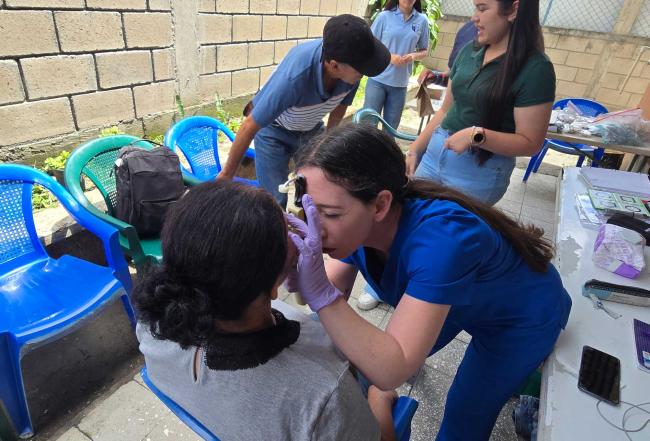
When Tal Carmy-Bennun ‘29, joined VCOM-Carolinas' medical outreach team in Honduras this summer, she launched a new glaucoma screening effort aimed at identifying eye disease before it leads to permanent vision loss.
Carmy-Bennun had previously volunteered with the Bascom Palmer Eye Institute in South Florida and used that experience to help develop the screening effort.
Glaucoma is often called the 'silent thief of sight' because it gradually damages the optic nerve without noticeable symptoms until vision loss has already occurred. When it's detected early, glaucoma can often be managed with effective treatment. Screening gives people a better chance to preserve their vision and maintain their ability to work, care for their families, and remain independent.
Carmy-Bennum set her sights on specialized screenings as a first-year medical student. She began by contacting eye care providers across the Spartanburg area in search of equipment and supplies.
"I started by searching online for local eye clinics and reached out to each one individually," Carmy-Bennun said.
Her efforts paid off when Carolinas Vision Associates Spartanburg loaned a Kowa HA-1 tonometer to measure intraocular pressure and a pachymeter to measure corneal thickness. Spartanburg Vision donated anesthetic eye drops. With the equipment secured, Carmy-Bennun and the mission team were able to offer glaucoma screenings for the first time during the Honduras trip.
The value of the screenings became clear during the trip when one patient arrived with several risk factors associated with primary open-angle glaucoma, including hypertension, progressive vision loss, and reduced corneal thickness. Based on the screening results, the patient was referred to an ophthalmologist for a full evaluation. Because glaucoma can run in families, her adult daughter was also encouraged to be screened.
"Vision loss has profound consequences anywhere, but the challenges can be even greater in developing countries," she said. "Many people rely on their vision for their livelihood, whether that's manual labor, transportation, caregiving, or daily tasks. Losing vision can affect a person's ability to work and support their family."
Carmy-Bennun is eager to expand the effort in future missions.
"Many patients came to the clinic with eye-related concerns, which highlighted the demand for eye care services," she said. "I would like to continue improving this program and work toward a more comprehensive glaucoma screening effort during future international medical missions."