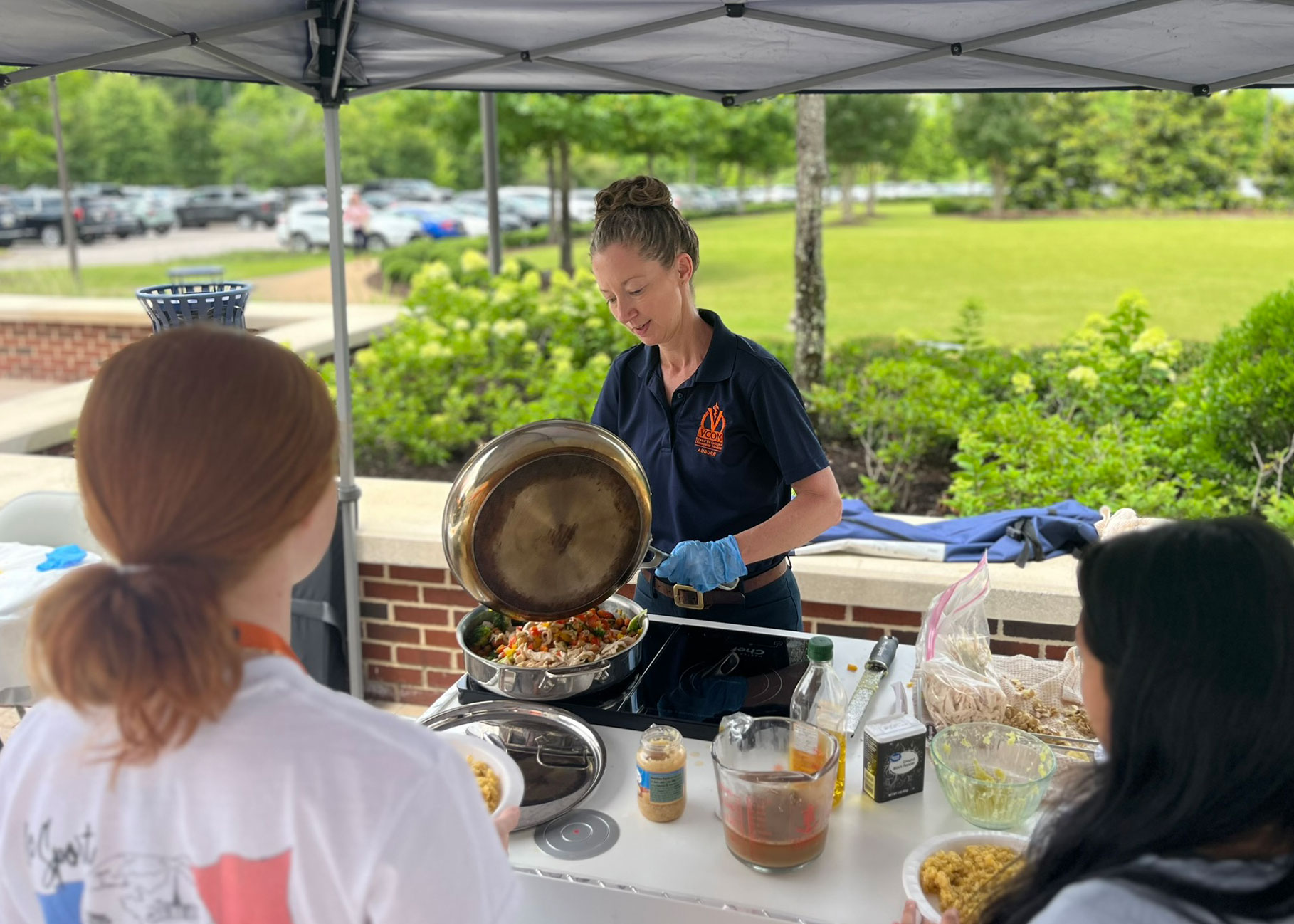
At VCOM, nutrition is integrated throughout the curriculum as a core component of the College’s commitment to preventive care and patient-centered counseling. Recognizing the critical role nutrition plays in long-term health outcomes, VCOM continues to expand innovative approaches that equip future physicians with the knowledge and confidence to guide patients toward healthier lifestyles.
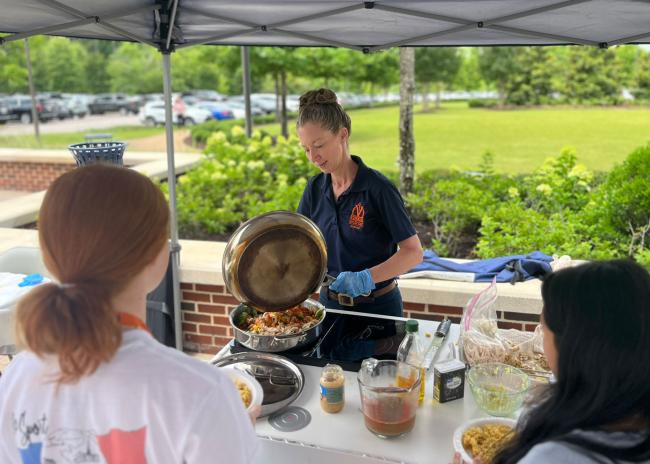
Building on this foundation, faculty at VCOM-Auburn developed an interdisciplinary culinary medicine (CM) elective to give medical students practical experience applying nutrition knowledge in clinical settings. The course engages osteopathic medical and nurse practitioner students in sessions that link nutrition science directly to patient care. Students prepare balanced meals, measure portions, and practice patient counseling through role-play, turning theoretical knowledge into actionable guidance for patients.
The effectiveness of this approach was evaluated in a recent study, “Assessing nutrition literacy and nutrition counseling proficiency following an interdisciplinary culinary medicine elective.” Using a pretest-post test design, participants completed assessments of nutrition literacy, counseling proficiency, and dietary habits before and after the course. The medical students actively participated in cooking exercises and counseling practice throughout the elective.
The results demonstrated significant improvements in provider skills. Overall nutrition literacy increased, with the largest gains in understanding household measurements, a critical skill for conveying dietary guidance in patient-friendly terms. Participants also reported greater confidence in counseling patients on nutritional basics, macronutrients, prevention, wellness strategies, and food safety. These outcomes highlight the elective’s measurable impact on applied clinical skills.
While students’ personal dietary habits did not change significantly, the course substantially strengthened their ability to provide preventive care. They practiced assessing patients’ dietary needs, delivering actionable guidance, and integrating nutrition counseling into routine care. By applying these skills in real-world scenarios, students reinforced their capacity to address diet-related health risks effectively.
Gary Mount, PharmD, discipline chair for Pharmacology, emphasized the broader significance: “By improving provider confidence in nutrition counseling, this model directly addresses the root causes of noncommunicable diseases such as obesity, Type 2 diabetes, and hypertension.” He also described the program as an “educational blueprint” for other institutions seeking to integrate culinary medicine into health professions education.
I believe deeply that food is medicine and that education about and access to healthy food are essential to health. Through offering culinary medicine in medical education, we are equipping future physicians with the tools to effectively teach patients and families how to engage in healthy nutrition behaviors and ultimately improve their overall health.
These efforts reflect a larger shift in medical education, recognizing nutrition as a foundational element of patient care. By embedding nutrition instruction across coursework and reinforcing it with experiential learning through programs like the CM elective, VCOM ensures students are not only knowledgeable but prepared to apply that knowledge in meaningful and measurable ways.