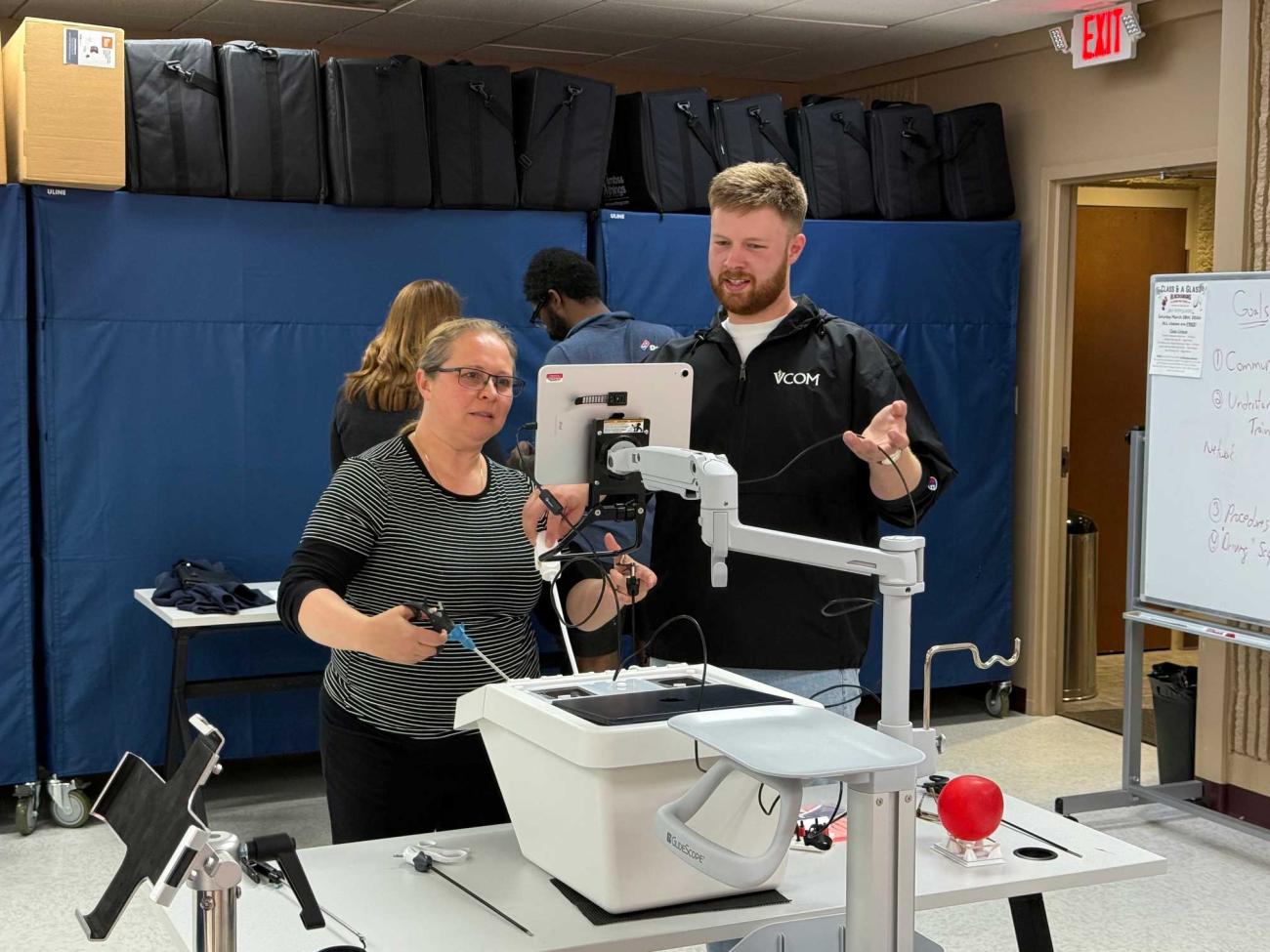
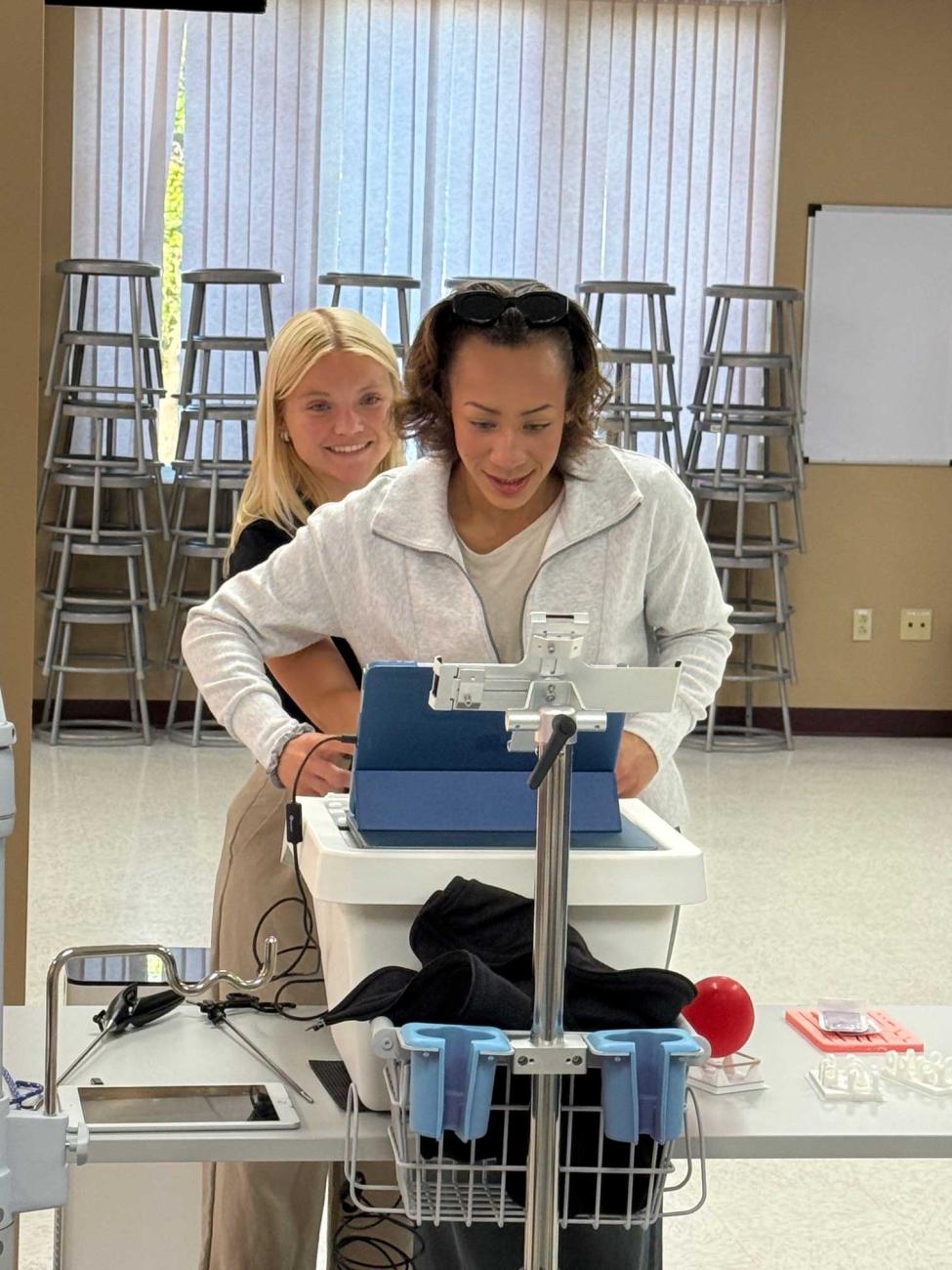
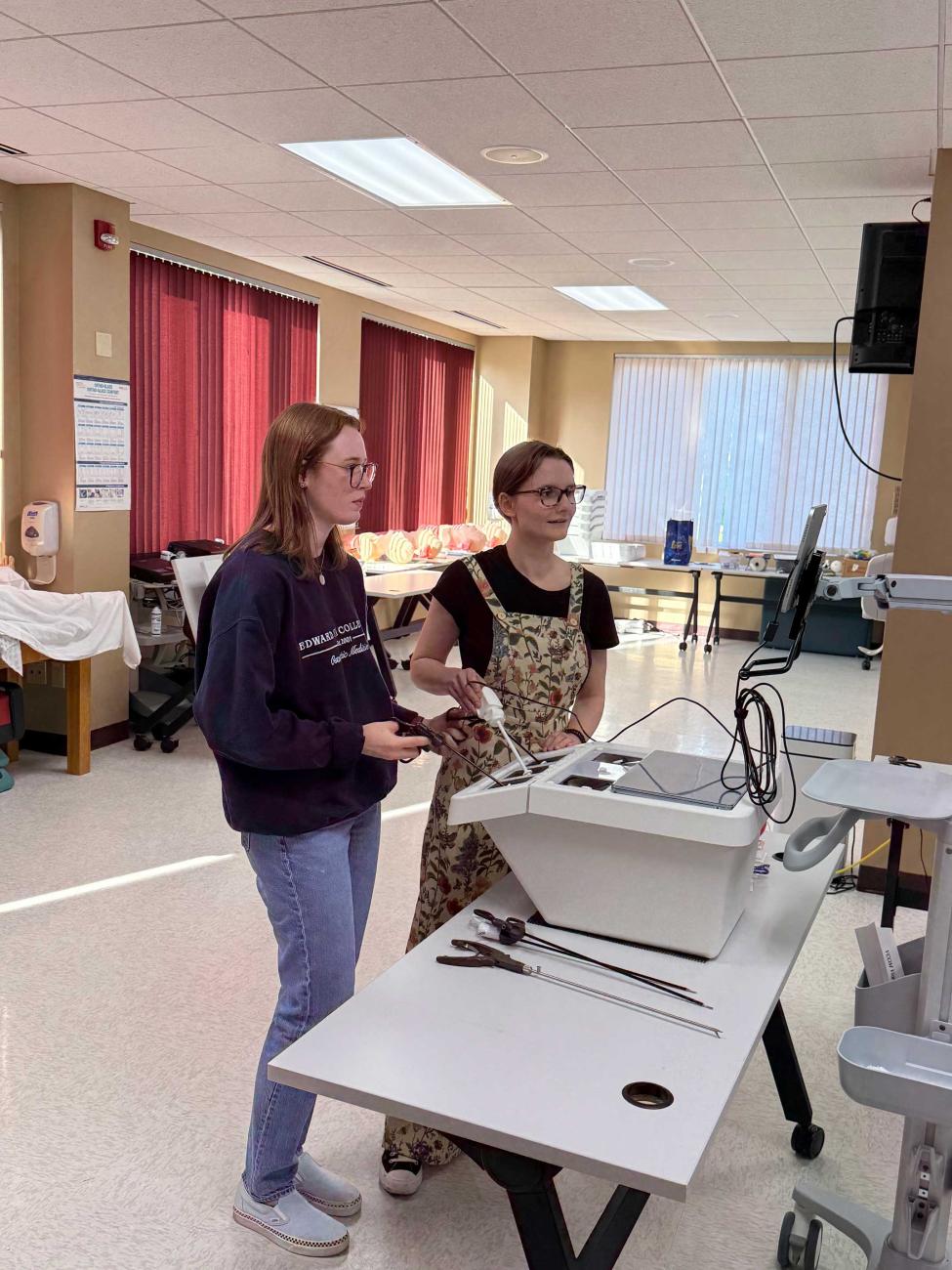
David Grace, VCOM-Virginia '28, works with a Radford University Nursing student on the laparoscopic trainer he developed.
It is well known that the U.S. is facing a physician shortage, with one study from the Association of Medical Colleges painting a bleak picture: There will be a shortage of 86,000 physicians by 2036. In fact, this shortage was apparent more than 25 years ago when John and Sue Ellen Rocovich began their work to found the Edward Via College of Osteopathic Medicine (VCOM).
However, such shortages aren’t limited to physicians. The healthcare workforce is understaffed across multiple sectors, including nursing, and rural areas are most in need of qualified staff. That is why in many rural hospitals, nurses may find themselves assisting in procedures outside their usual specialties, and care teams must rely on strong communication and teamwork to take care of patients effectively.
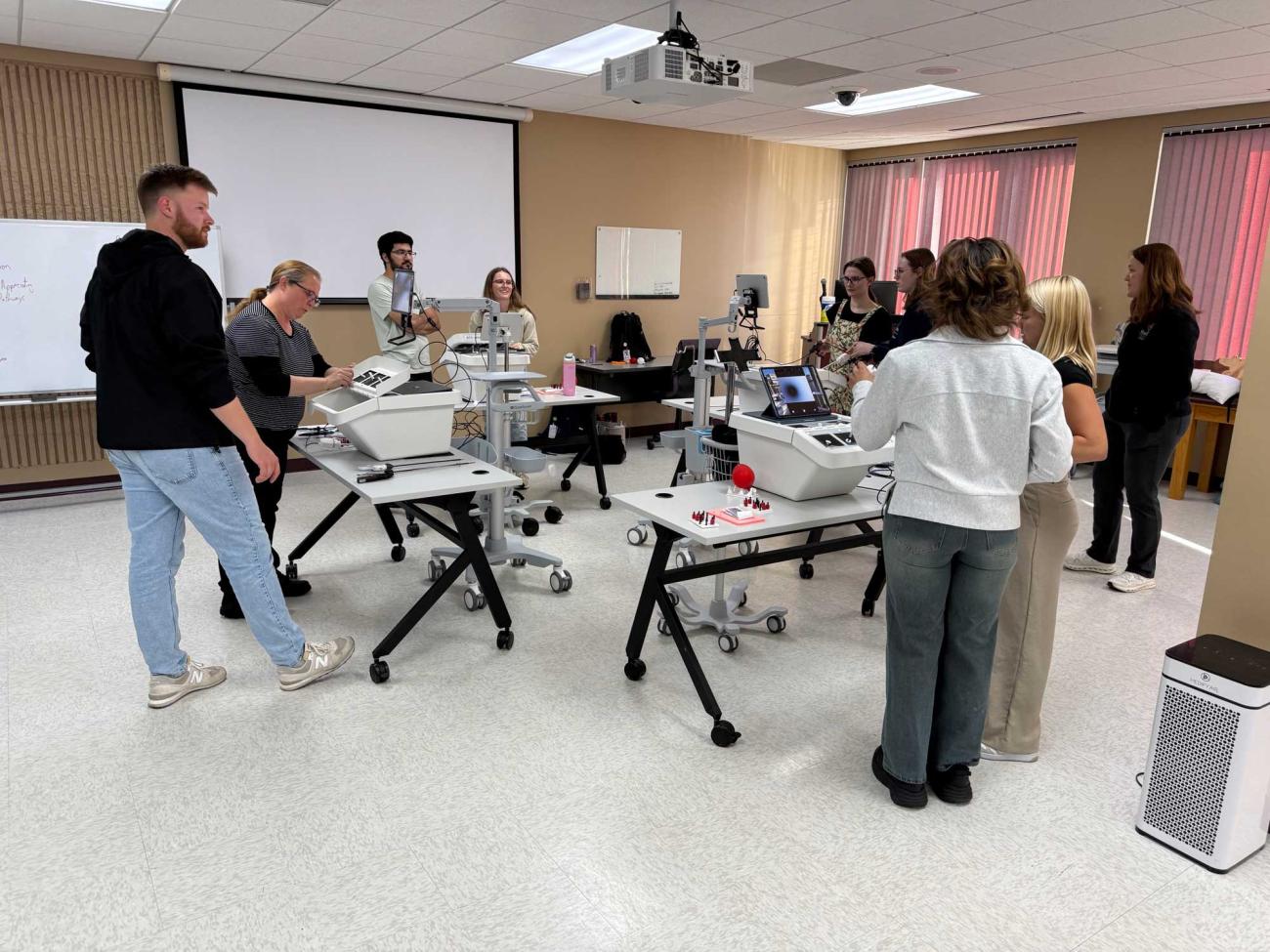
To help prepare future healthcare providers for those realities, students from VCOM-Virginia and Radford University's College of Nursing recently came together in the VCOM-Virginia Simulation Center for an interprofessional training experience focused on communication during laparoscopic surgery.
The exercise utilized a laparoscopic surgery trainer designed and built by VCOM students, a project that reflects the College's commitment to innovation, applied learning, and collaborative approaches to improving healthcare delivery.
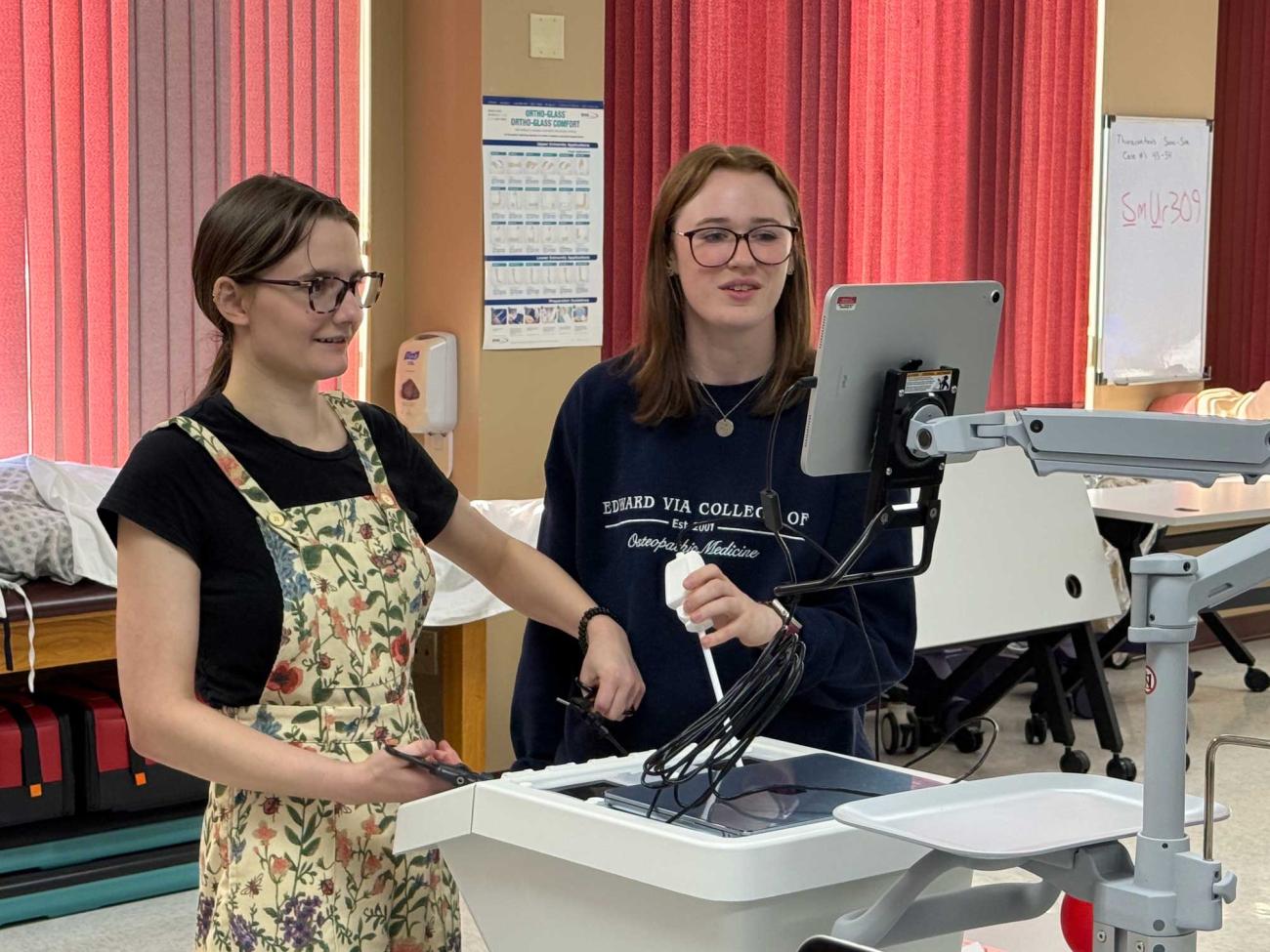
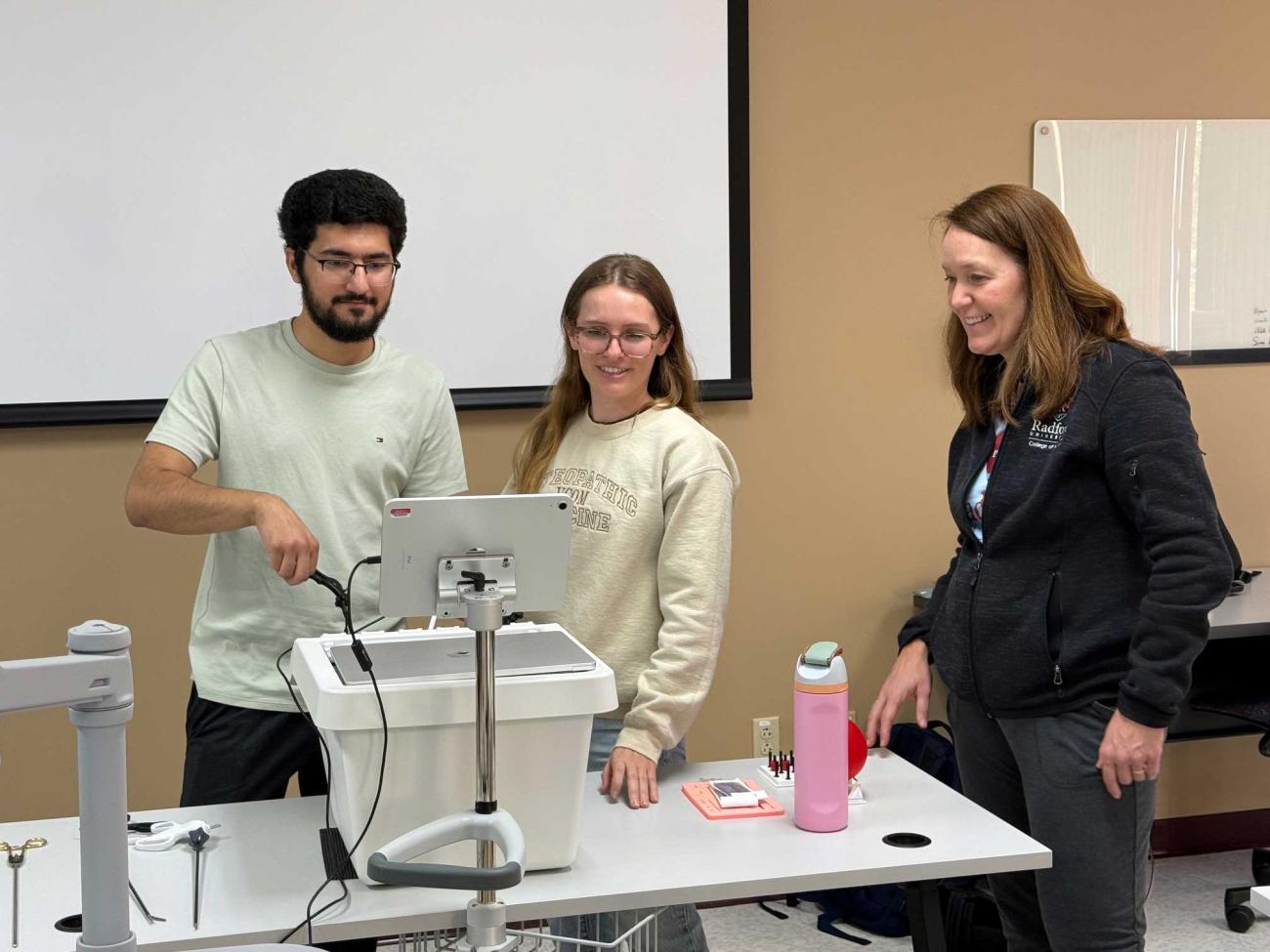
Unlike traditional laparoscopic trainers designed for a single user, the VCOM-developed simulator allows two participants to work together. One student controls the laparoscopic camera while the other performs the procedure, requiring continuous communication between the two.
The trainer is being used as a facilitator to get people together. Using that as our tool to get this collaboration, we got folks to talk to each other, to partner with each other, to explain to each other what they needed to see.
The pilot program paired four VCOM medical students with four nursing students from Radford University. Each pair completed a series of increasingly challenging exercises, alternating between performing the task and operating the camera. As the activities became more complex, students learned to give clear instructions, anticipate one another's needs, and communicate effectively under pressure.
Beyond helping students develop technical skills, the experience gave future physicians and nurses a better understanding of one another's roles before they enter clinical practice. One VCOM student noted that the simulation provided "a much better understanding of where [the] nursing student is" than previous interprofessional experiences and demonstrated how effective communication with supporting staff applies well beyond the operating room.
Nursing school teaches you to anticipate and predict the next steps, and the VCOM simulation allowed us to experience that firsthand. I believe experiences like this build confidence and trust between future colleagues, which can lead to better patient care.
The concept for the exercise grew out of an earlier student-led effort to make laparoscopic training more accessible. Commercial trainers can cost thousands of dollars, but VCOM students, working alongside Dr. Bissell, developed a version that costs approximately $65 to build. Originally created to help students interested in surgery practice laparoscopic skills outside the operating room, the trainers have since opened new opportunities for collaborative education.
Preparing future physicians and nurses to communicate effectively before they begin caring for patients can strengthen healthcare teams wherever they practice.
"You go out to Giles [County], you don't have any medical students," Dr. Bissell said. "It’s important to help nurses feel comfortable partnering with physicians to expand their skill set with collaborative decision-making and critical thinking."
Christina Keller, who co-led the activity with Dr. Bissell and is the executive director of the Jo Ann Bingham Clinical Simulation Center at Radford University, agreed adding, “One of the greatest strengths of simulation is its ability to bring future healthcare professionals together in a realistic, low-risk environment where they can learn with and from one another. Our nursing students left with a deeper understanding of the medical students' role, while also gaining confidence in communicating, collaborating, and advocating for patients as members of an interprofessional team."
The pilot program is still in its early stages, but VCOM and its partners see opportunities to expand the initiative in the future. Potential next steps include offering the experience to larger groups of students and exploring additional partnerships with other nursing programs. For now, however, the successful pilot has demonstrated that a simple idea—bringing future physicians and nurses together around a student-designed training tool—can help build the communication skills that ultimately improve patient care.